Raiffeisen Online
Subscriptions
The feature that helps people control periodic charges
from their cards by third-party services.
Contribution
I collaborated with other product teams and an agency that provided content for the feature. Participated in the formation of hypotheses and preparation for the research, created the prototype, UX/UI and controlled the quality of implementation into production.
Discovery
We took a close look at analytics of customer spending on recurring charges from various services to understand the scale of the audience and know in which services and how much money users are spending.
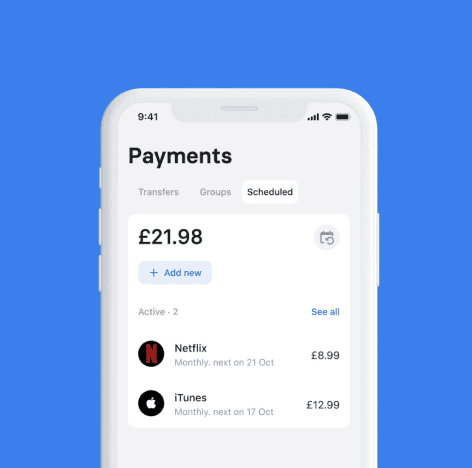
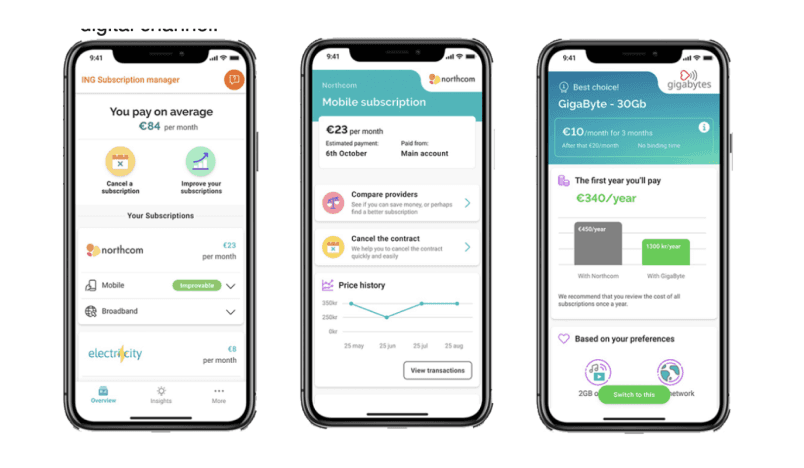
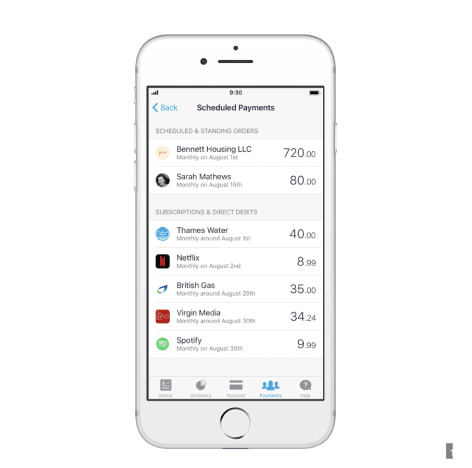
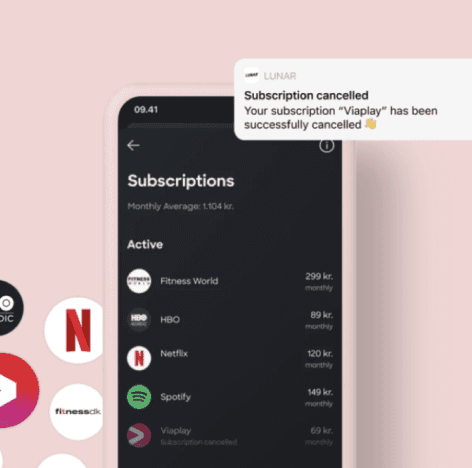
We conducted benchmarking to understand how other products currently solve a similar problems.
The research was conducted on subscription services, and here are some interesting facts:
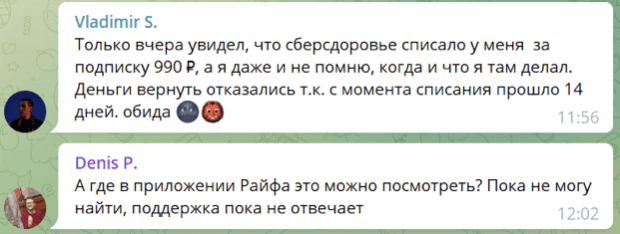
Among those who stopped using paid services, 52% noted that they forgot to cancel on time, resulting in prolonged payments for unused services with the subscription not being visible. One in four experienced unauthorized account debits. And some had to change their bank card to get rid of their subscription.
We discussed with the technical partners what data we have, how we can use it, and what constraints exist. It was revealed that we won't be able to implement subscription cancellation and some other features immediately. Nevertheless, we decided to research all the possibilities that may be available to us in the future. And concurrently, we were considering alternative technical solutions for the functionality.
Design, UX tests
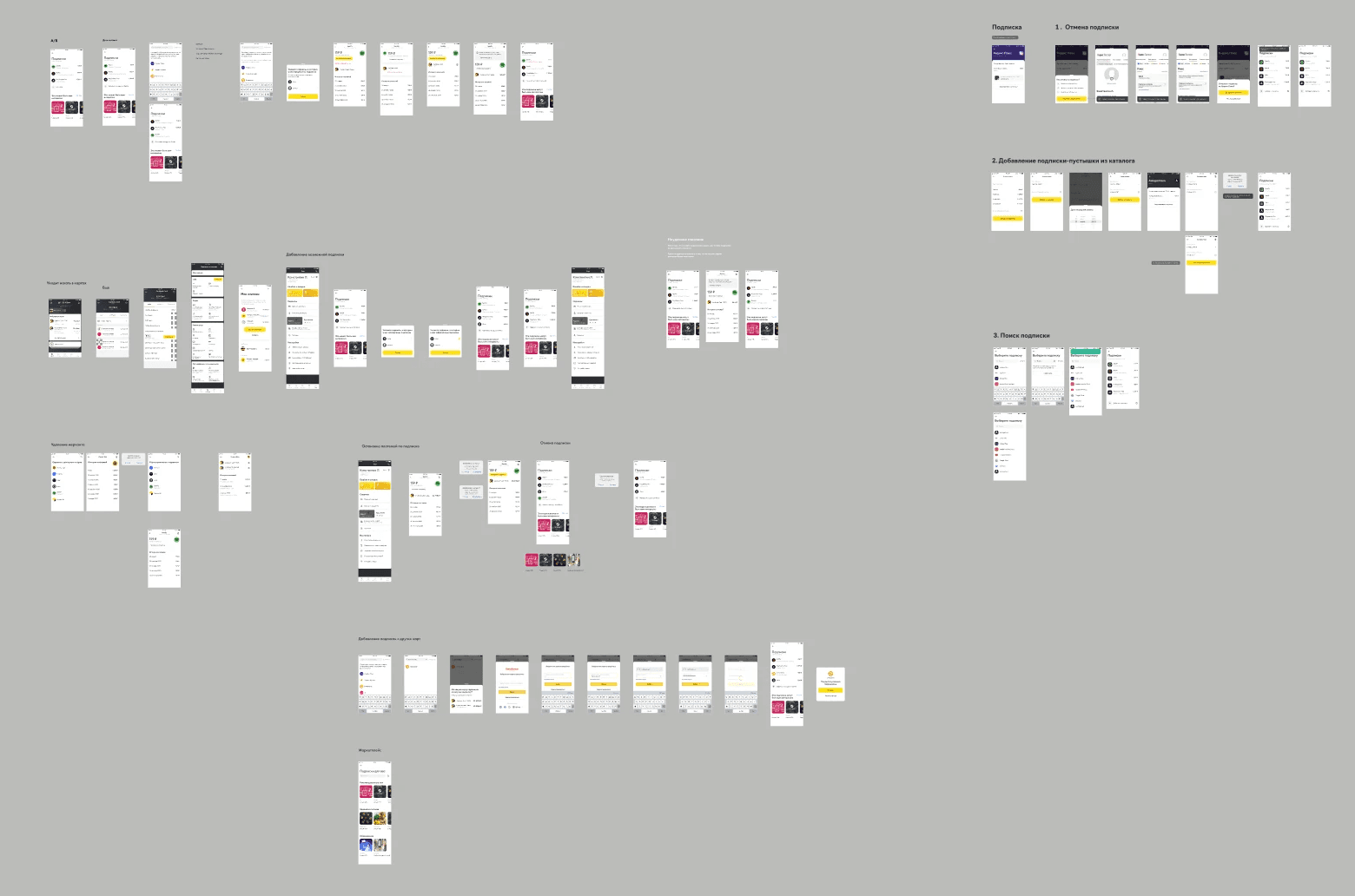
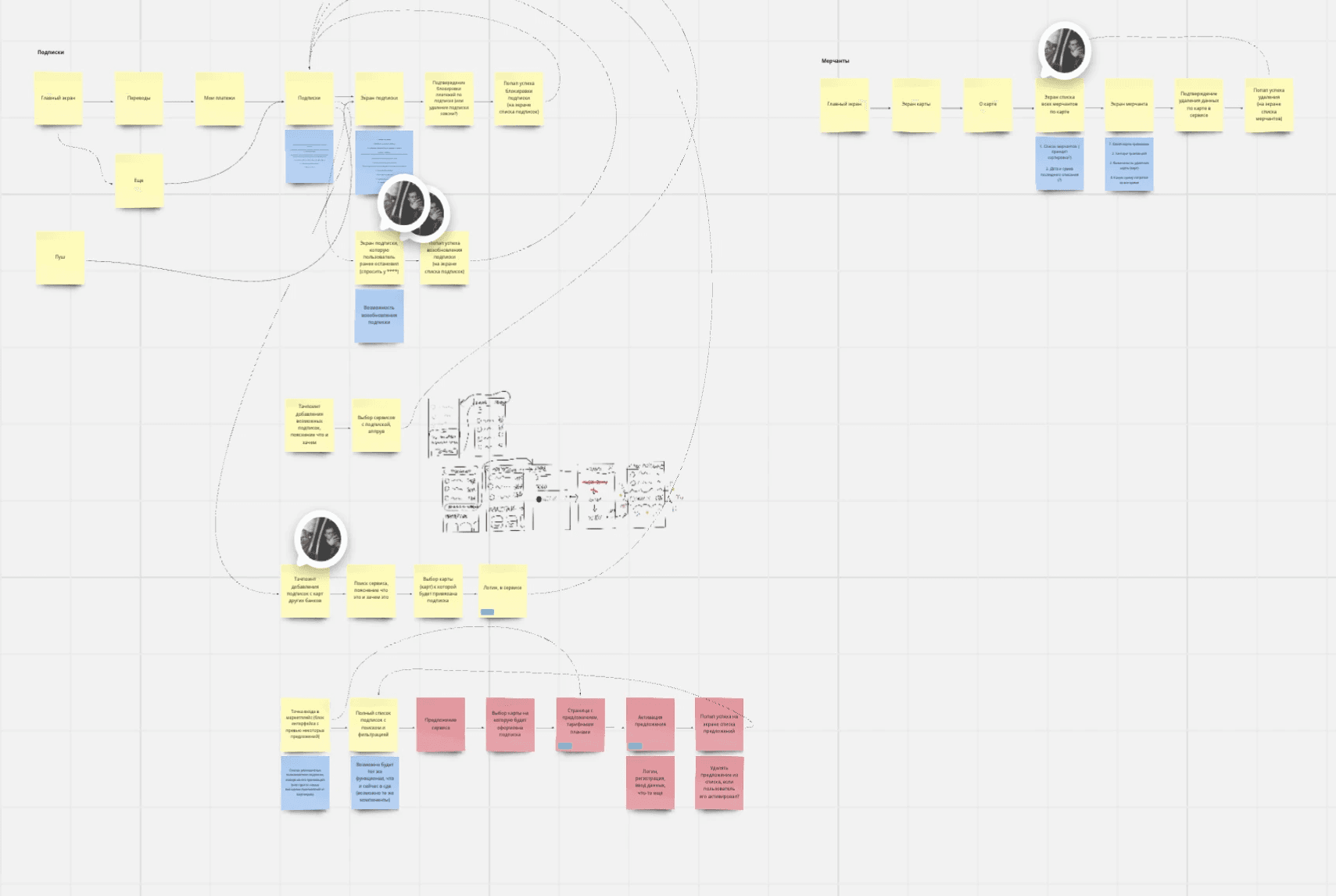
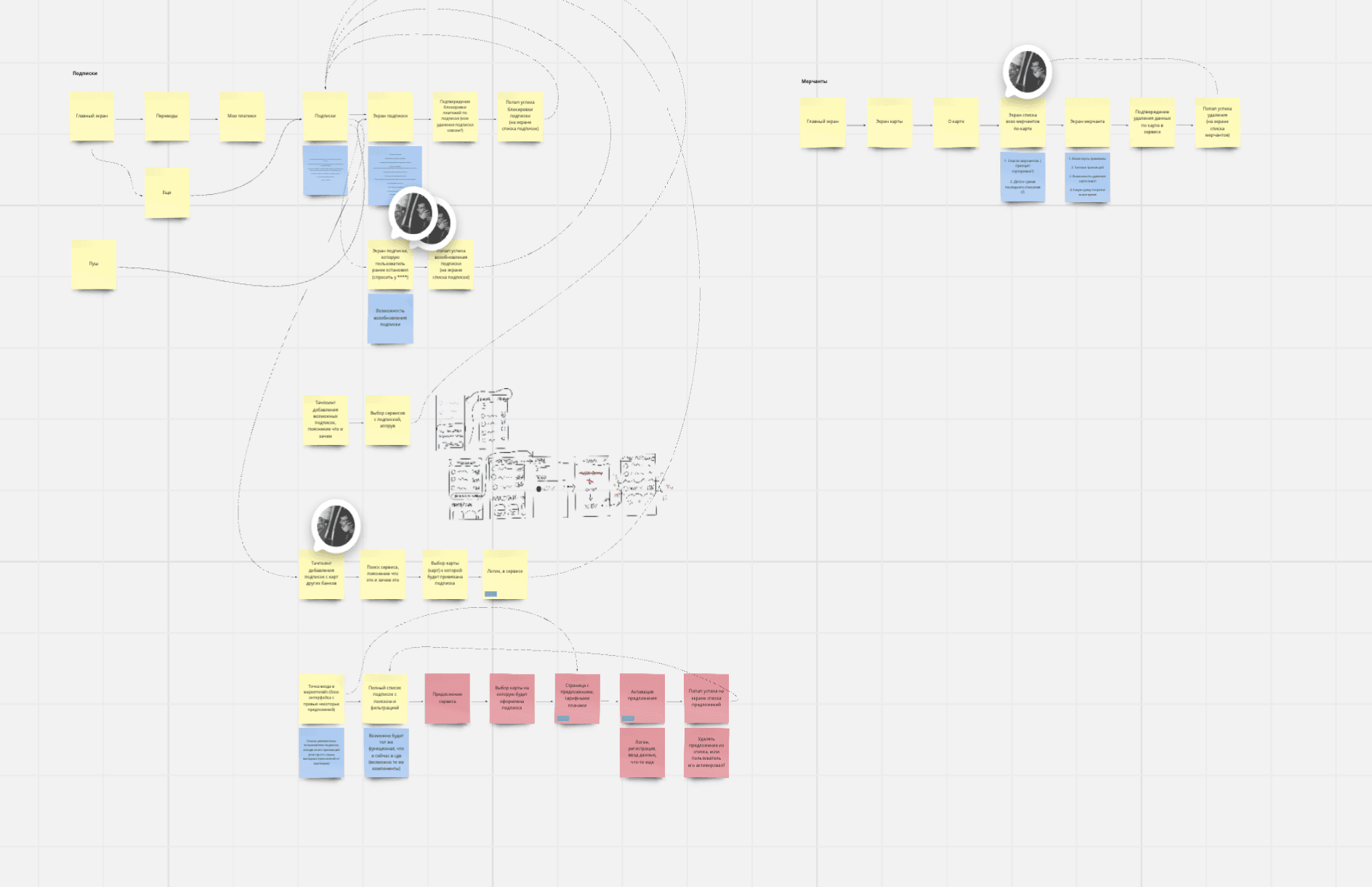
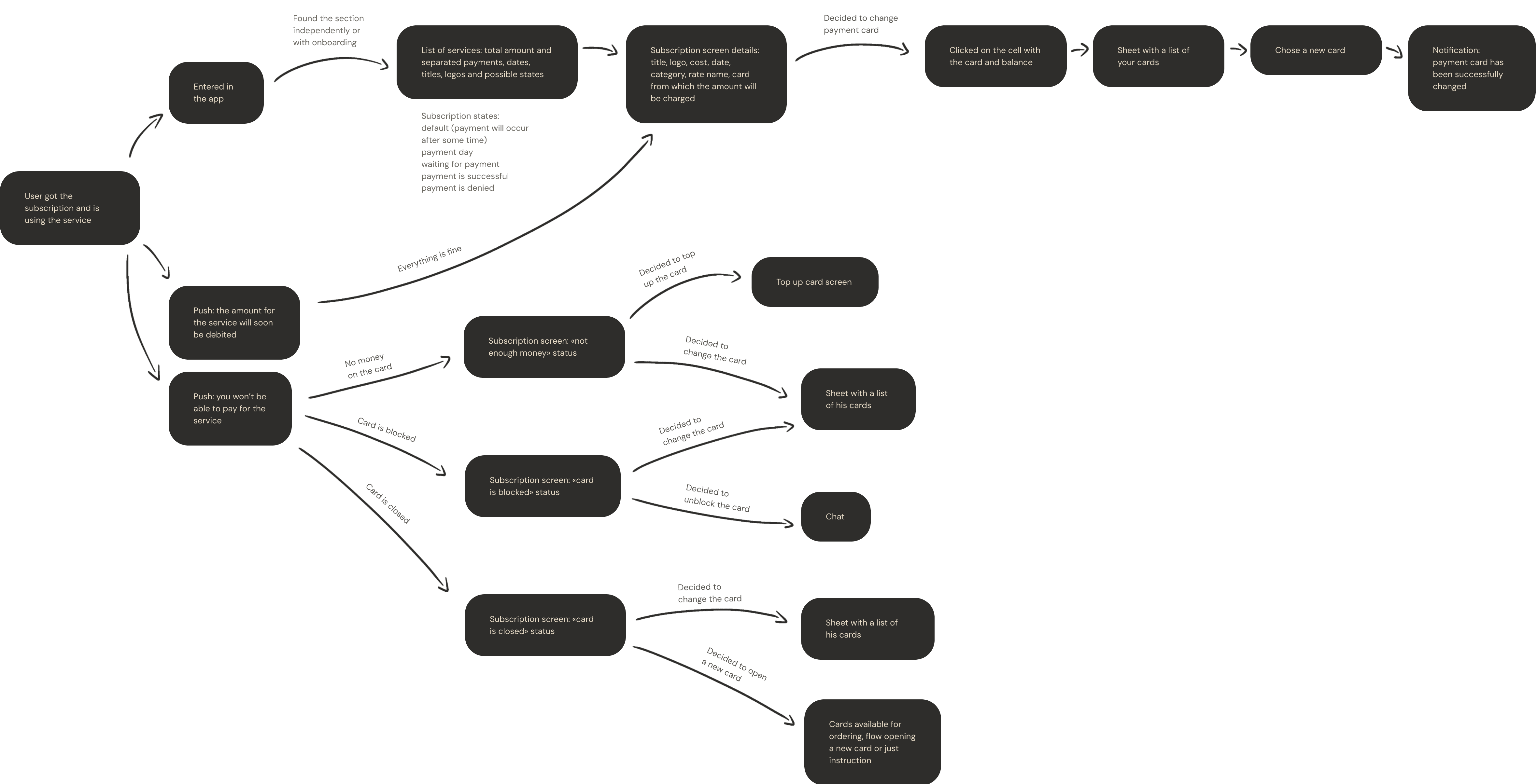
We discussed with the team which hypotheses we will test, how, and I designed a user journey for each of them.
I sketched out low-level flows. For the touchpoint of the subscriptions list, two hypotheses emerged, with one related to the functionality of the team that worked on payments. We brainstormed and collaborated with designers from another team to outline how our feature could be integrated into their functionality.
We prepared questions from business and UX perspectives for the research guide and I created the prototype with branches for each of the ideas, and we conducted the
research.
In the end, the subscription management feature turned out to be the most in demand among respondents, so we took it to work.
What problem we were solving and why
Our team's focus was on increasing user engagement and their loyalty.
The idea emerged to provide users with a feature that would help them control periodic payments from their cards by third-party services. There is a hypothesis that this feature may be in demand among customers and could increase their loyalty to the brand due to its usefulness and uniqueness in the local market, especially considering the growing trend when businesses offer subscription models. Thus, we could improve the NPS metric for the product.
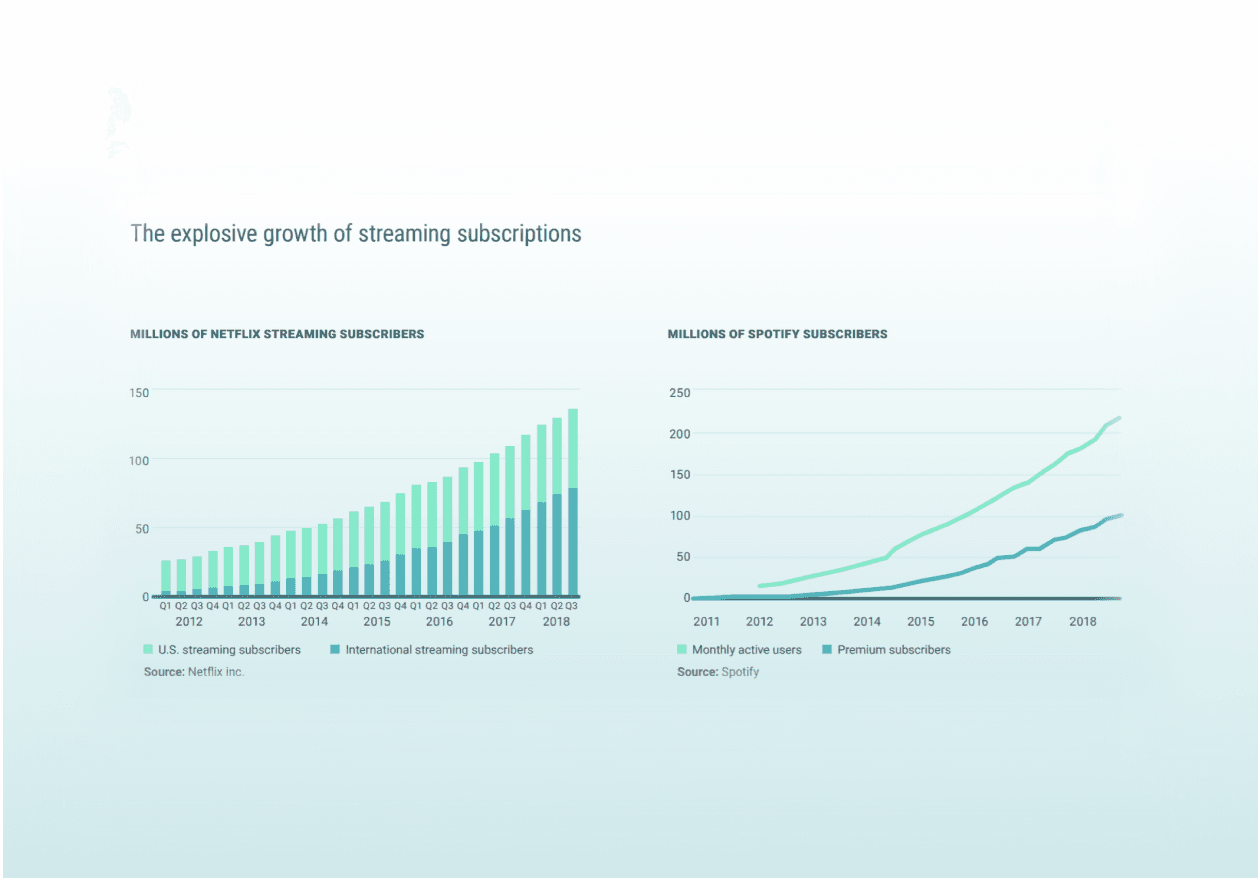
People often pay for services they no longer use, forget to unsubscribe from a service, or don't find an easy and quick way to do so. They end up spending more money, knowing that there are cheaper alternatives, but they don't have the time or energy to compare and switch service providers. These conclusions were drawn from insider reports and researches from third-party companies in the European fintech industry.
Ideas
How can we solve the problem, and what other value can we give to the user, using the data and technologies that we will have:
Provide the ability to view where periodic payments occur and the option to cancel them, in order to control all payments.
Transferring subscriptions from cards of other banks to Raiffeisen Bank card to see all subscriptions in one place.
A subscription marketplace with attractive offers to save time and effort (for business, it's an opportunity for cross-selling and partnerships).
The ability to view where there is no subscription, but for some reason, the service retains card information (e.g., a one-time purchase in the past), to find out how in-demand such a feature could be.
Overview
Raiffeisen Online is a mobile application for individuals of one of the systemically important banks in Russia.


User got the subscription and is using the service
Entered in
the app
Push: the amount for the service will soon be debited
Push: you won’t be able to pay for the service
Subscription screen: «not enough money» status
Top up card screen
Subscription screen: «card is blocked» status
Subscription screen: «card is closed» status
Cards available for ordering, flow opening a new card or just instruction
Chat
Sheet with a list of his cards
Sheet with a list of his cards
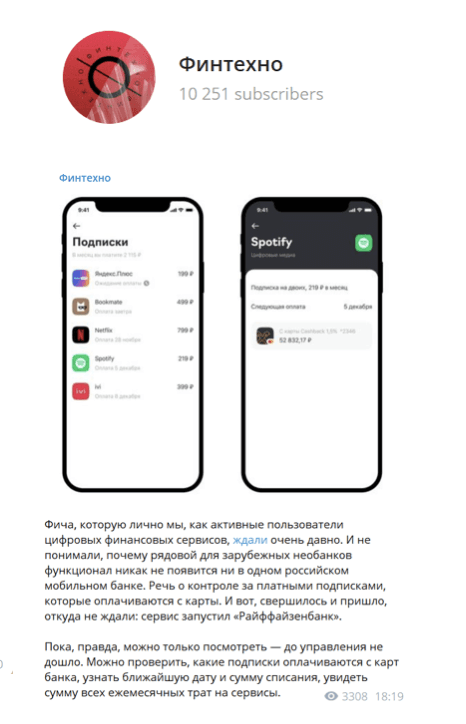
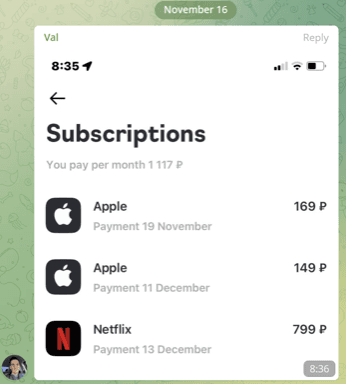
List of services: total amount and separated payments, dates, titles, logos and possible states
Subscription screen details:
title, logo, cost, date, category, rate name, card from which the amount will be charged
Clicked on the cell with the card and balance
Sheet with a list of your cards
Chose a new card
Notification: payment card has been successfully changed
Found the section
independently or
with onboarding
Subscription states:
default (payment will occur after some time)
payment day
waiting for payment
payment is successful
payment is denied
No money on the card
Everything is fine
Card is blocked
Card is closed
Decided to unblock the card
Decided to change the card
Decided to change the card
Decided to change the card
Decided to top up the card
Decided to open
a new card
Decided to change payment card
Drag it
User flow
Develop and launch
We didn’t include the option to change the payment card in the first release due to technical legacy issues on the backend, which could have significantly increased the development cost.
Simplified the functionality of corner cases for a quicker launch by providing text instructions in some cases on what happened and what can be done
Touchpoint
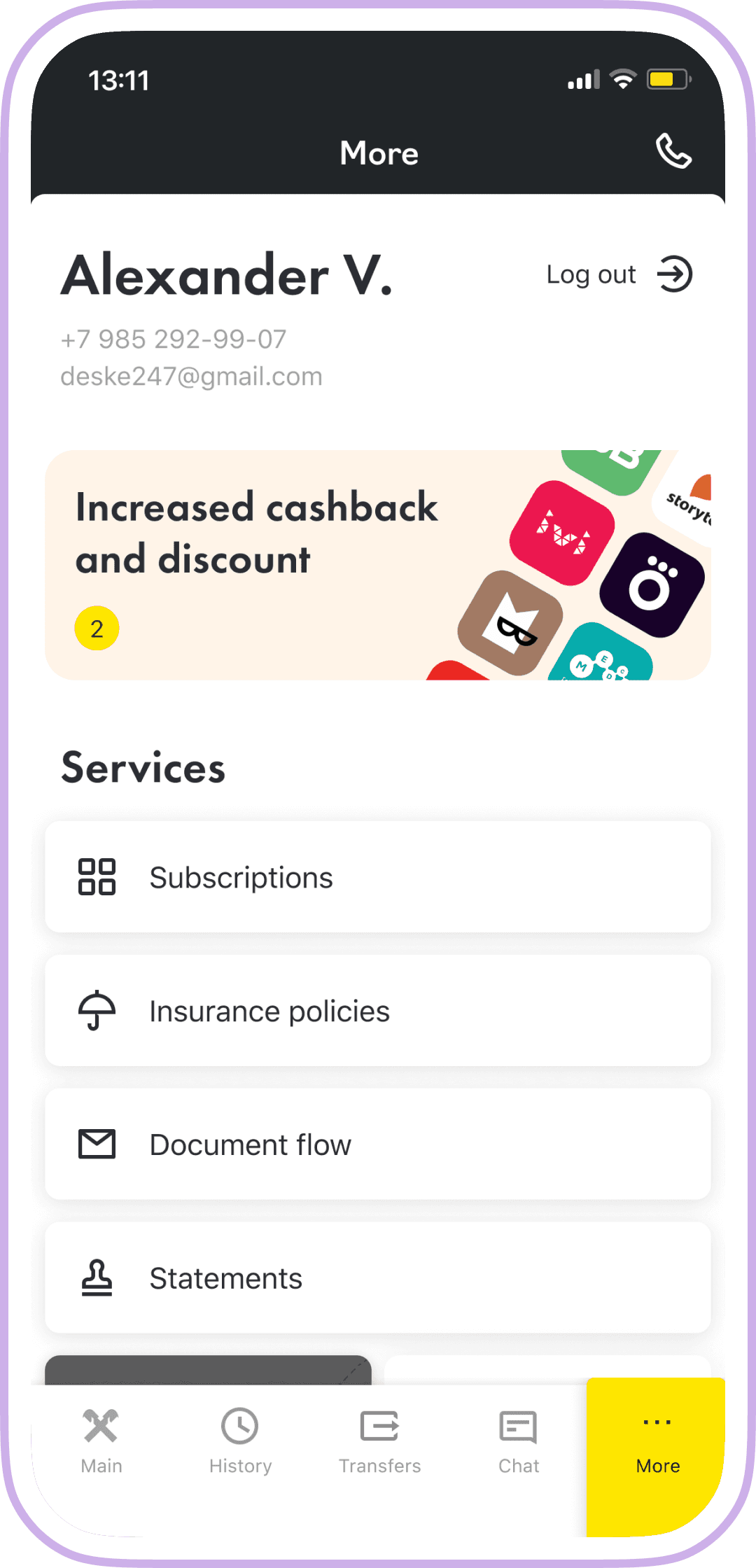
We researched where users would expect this feature within the current app architecture: the payments section in the «Transfers» tab (based on the idea that the users might expect subscriptions to be shown as scheduled payments) vs. the «More» tab, where non-core services of the banking app are located.
In the end, all respondents went to the «More» tab to find their subscriptions. However, the initial icon was not associated with such a service. We conducted a side-by-side test of pictograms, and the version chosen by users was added to the final design.
Subscription
On the subscription screen, in addition to the basic information from the previous screen, we show additional details: category, rate, the card linked in the service, and the balance on the card.
Logos didn't come with subscription information, and an external agency helped us with this.
I created a guide for them to prepare logos and backgrounds to make subscriptions easier to identify.
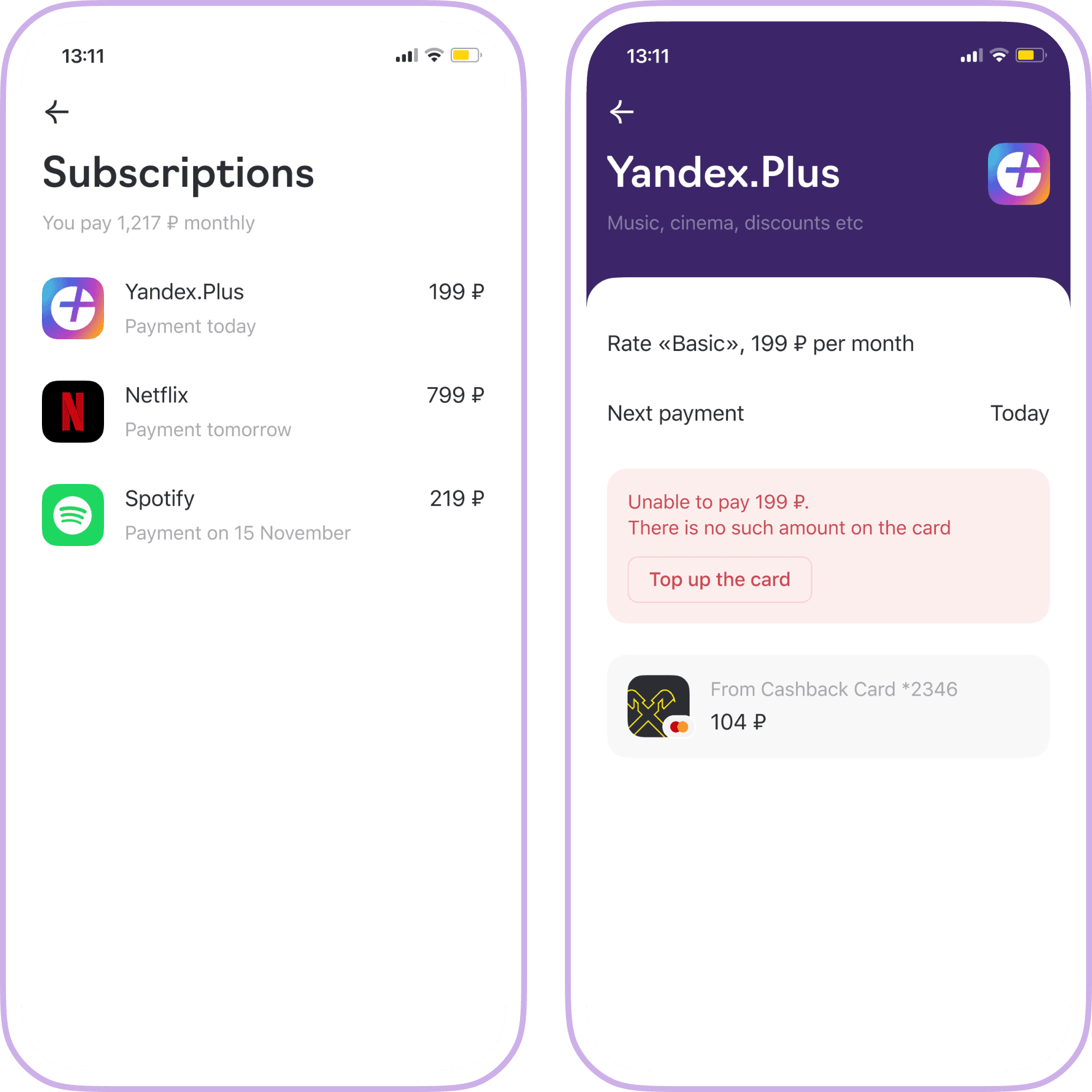
A day before the payment when there is not enough money on the card.
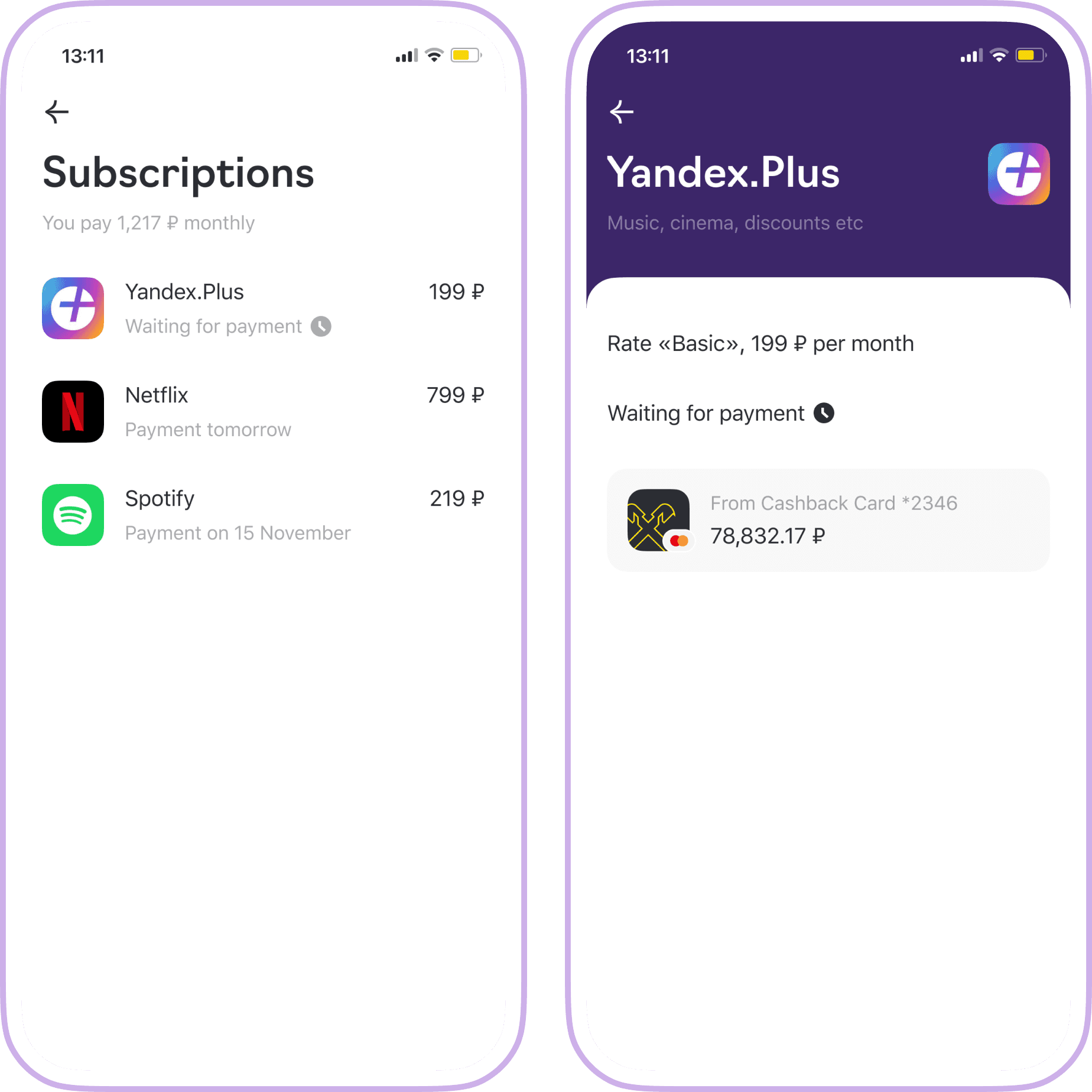
Payment day and after (waiting for the deduction from the service).
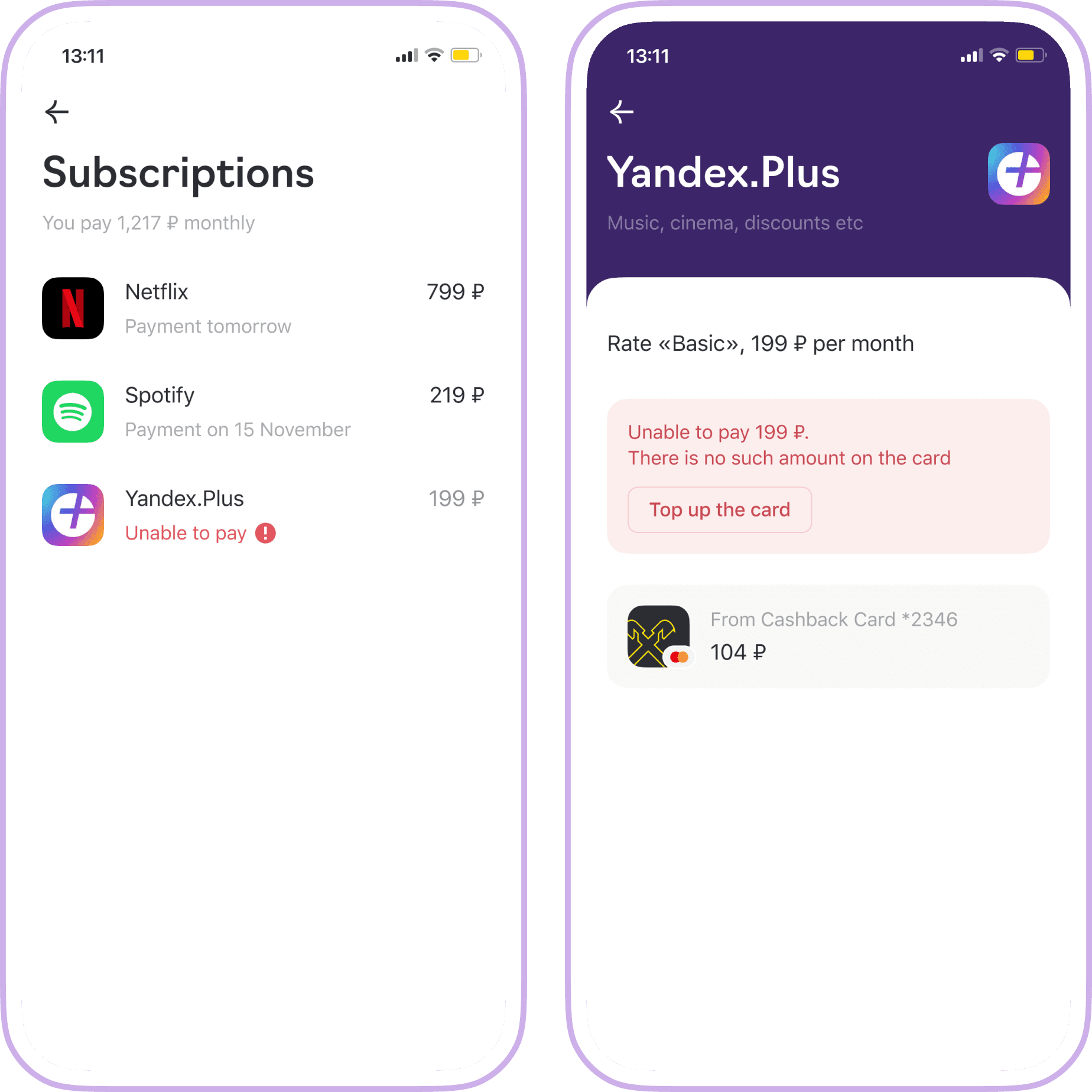
The service requested payment, but there is no money on the card.
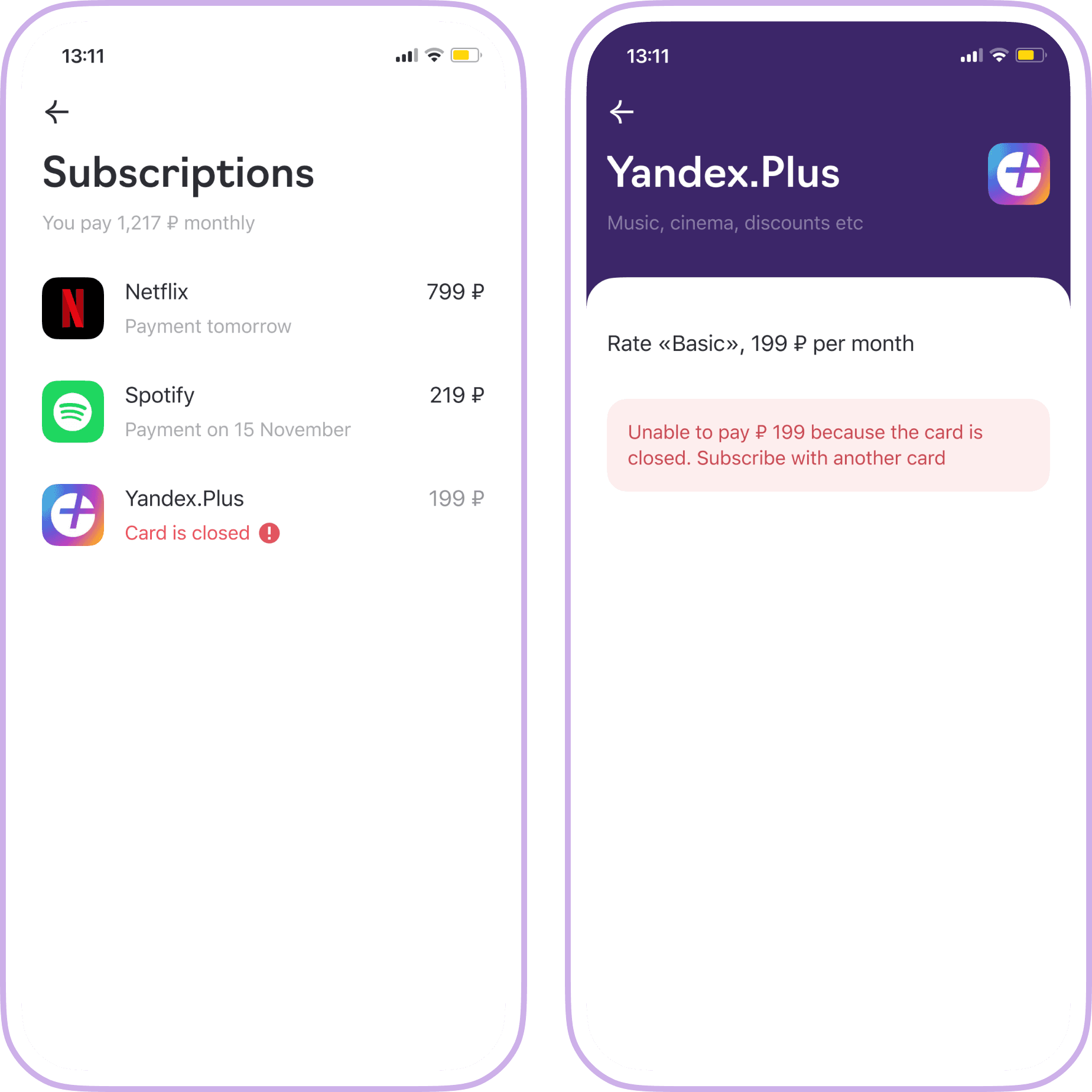
The card is blocked.
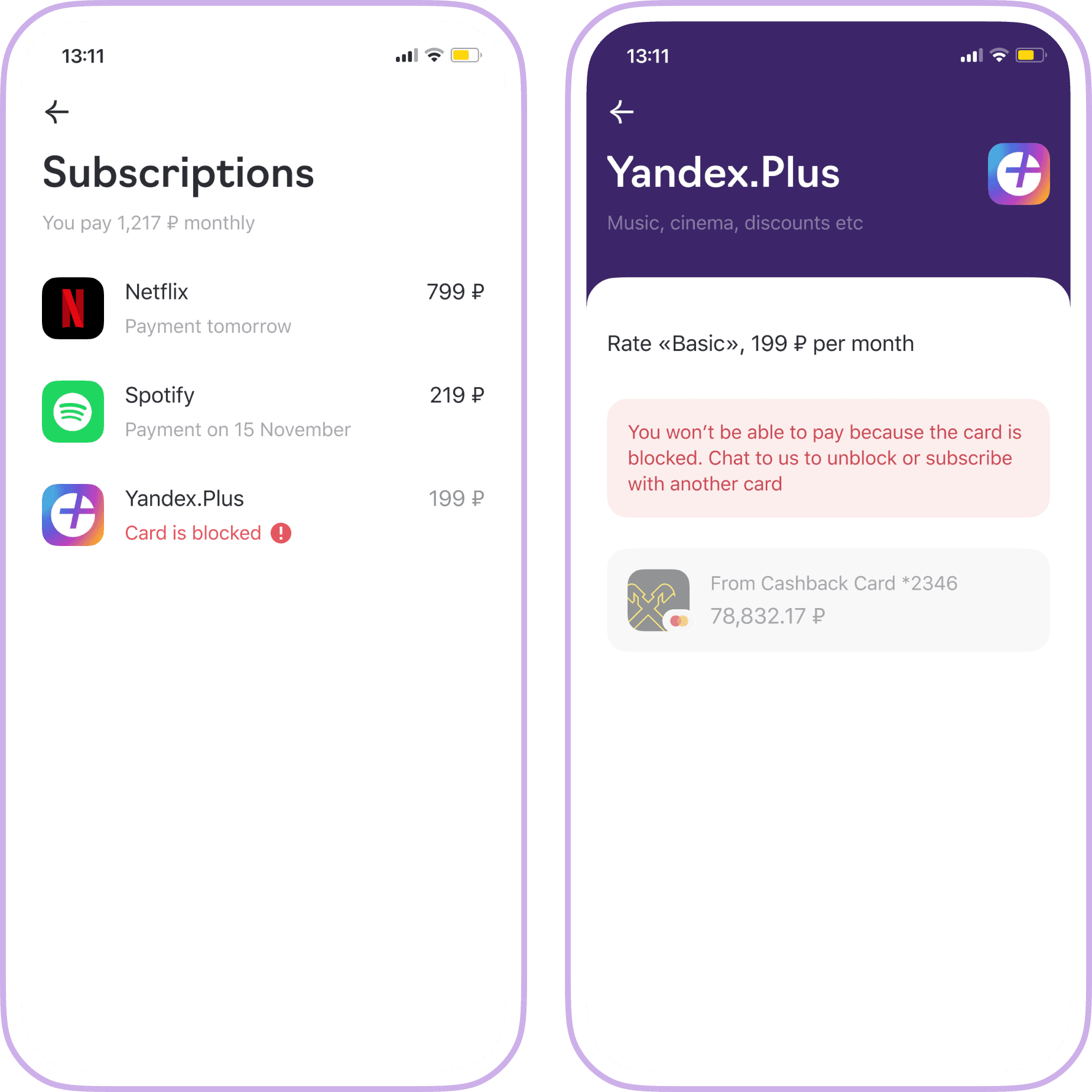
Card is closed.
Subscription states
List of services
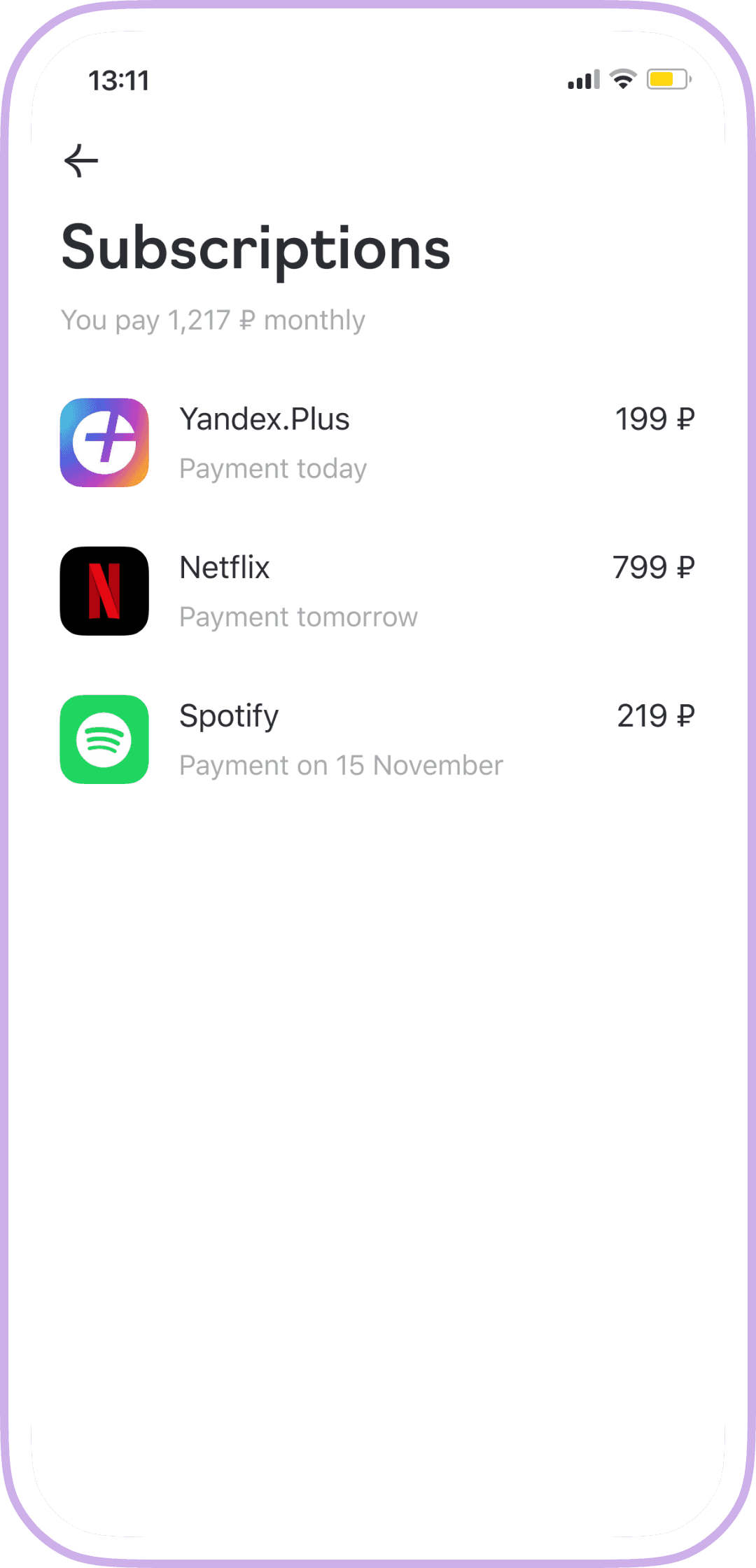
Under the title, we display the amount that the user pays monthly. As the vast majority of payments are monthly this format was convenient for showing the total amount.
For each subscription, we display the merchant's name, the payment date, the amount to be debited on that date, and additional information if there are any payment issues.
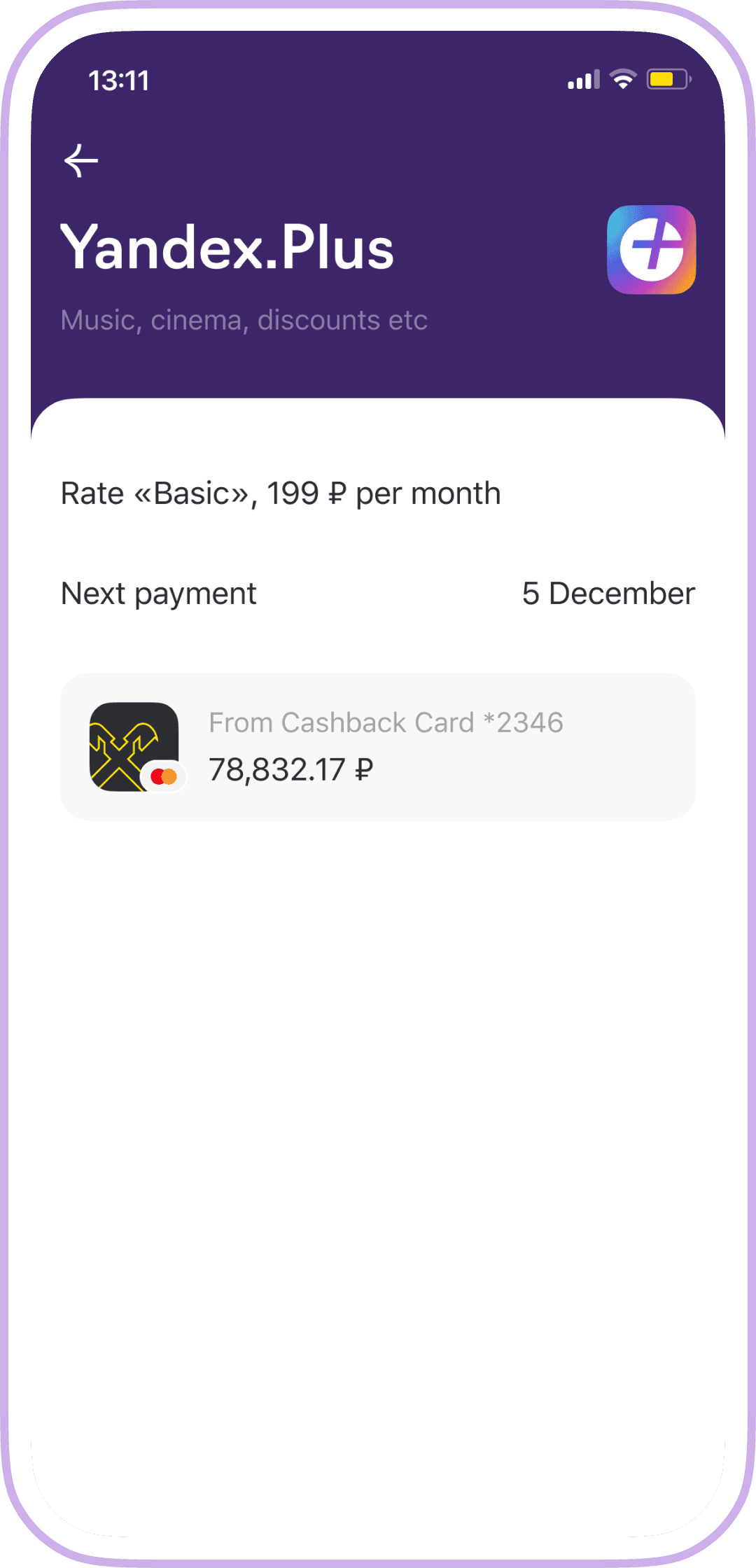
What we’ve implemented
Value for
users and business
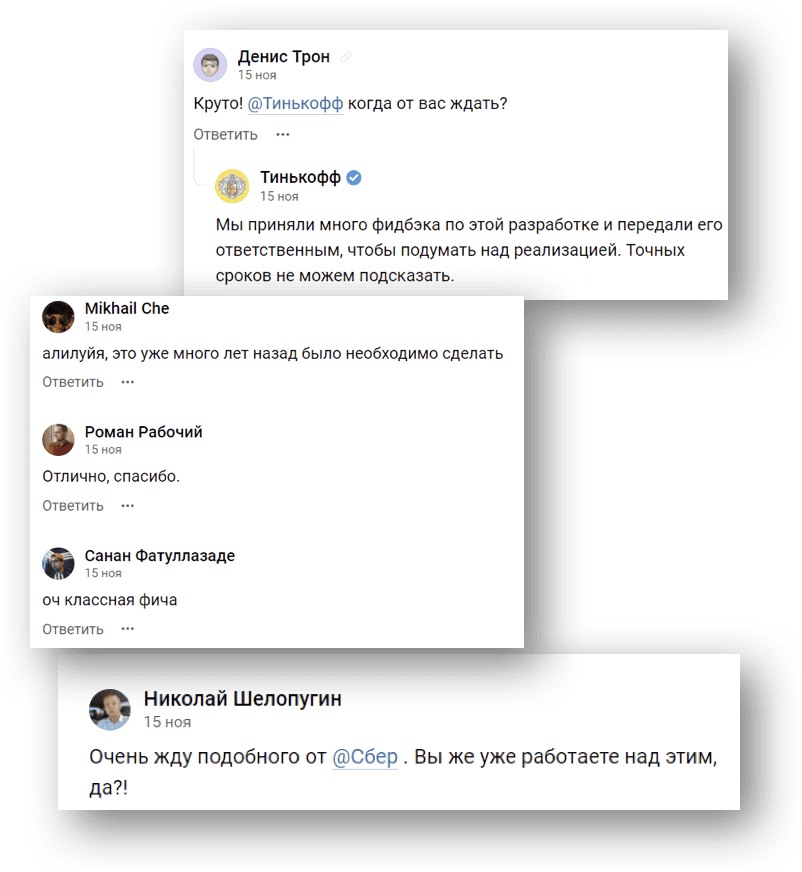
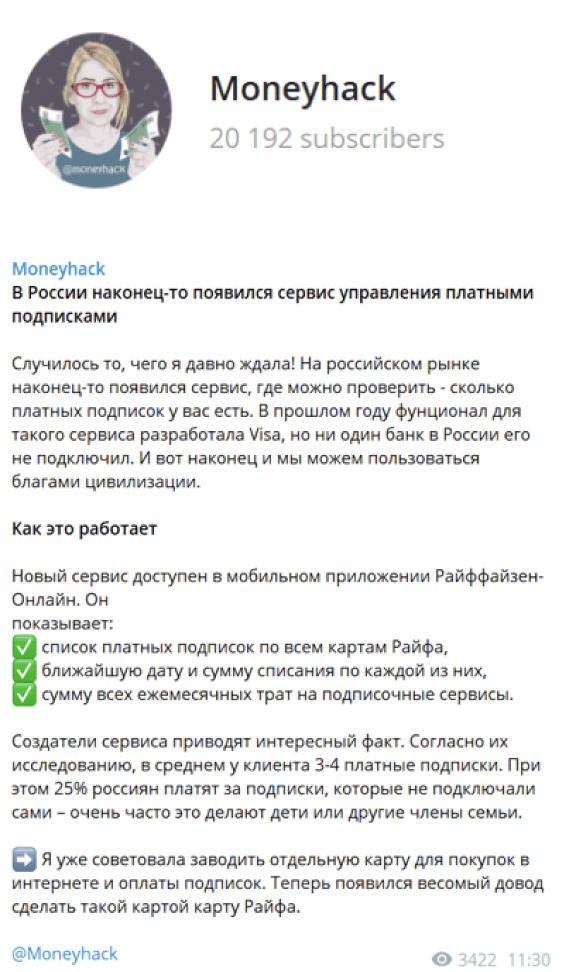
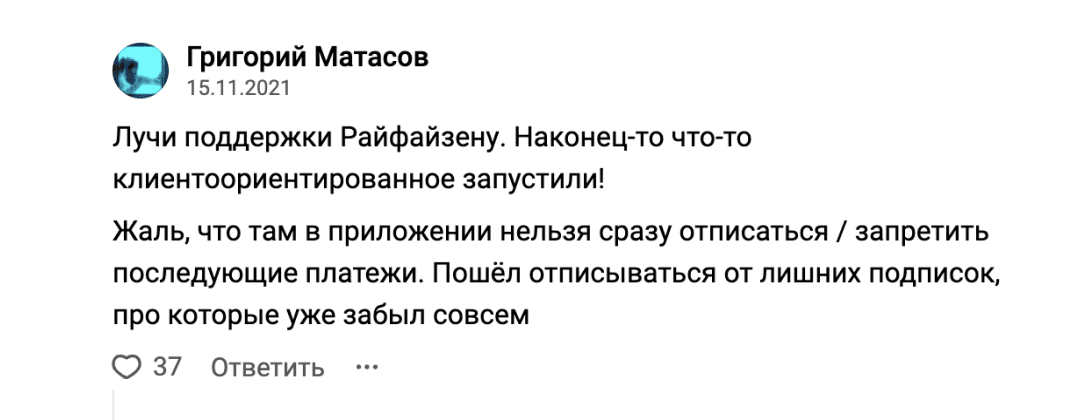
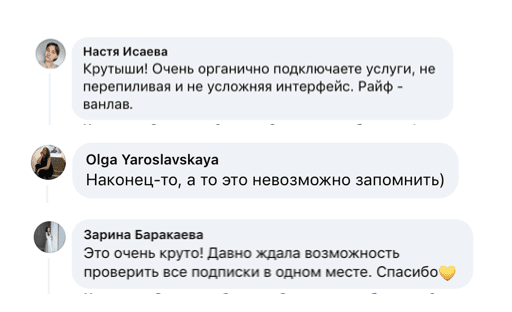
We received a lot of positive feedback from users across various channels, and we saw that 13% of people who had subscriptions showed activity in the section.


2023
2024
Discovery
The research was conducted on subscription services, and here are some interesting facts:
Among those who stopped using paid services, 52% noted that they forgot to cancel on time, resulting in prolonged payments for unused services with the subscription not being visible. One in four experienced unauthorized account debits. And some had to change their bank card to get rid of their subscription.
We took a close look at analytics of customer spending on recurring charges from various services to understand the scale of the audience and know in which services and how much money users are spending.
We discussed with the technical partners what data we have, how we can use it, and what constraints exist. It was revealed that we won't be able to implement subscription cancellation and some other features immediately. Nevertheless, we decided to research all the possibilities that may be available to us in the future. And concurrently, we were considering alternative technical solutions for the functionality.
We conducted benchmarking to understand how other products currently solve a similar problems.
Ideas
Provide the ability to view where periodic payments occur and the option to cancel them, in order to control all payments, thus improving NPS metric for the product.
Transferring subscriptions from cards of other banks to Raiffeisen Bank card to see all subscriptions in one place.
A subscription marketplace with attractive offers to save time and effort (for business, it's an opportunity for cross-selling and partnerships).
The ability to view where there is no subscription, but for some reason, the service retains card information (e.g., a one-time purchase in the past), to find out how in-demand such a feature could be.
How can we solve the problem, and what other value can we give to users, using the data and technologies that we will have:
Design, UX tests
We discussed with the team which hypotheses we will test, how, and I designed a user journey for each of them.
I sketched out low-level flows. For the touchpoint of the subscriptions list, two hypotheses emerged, with one related to the functionality of the team that worked on payments. We brainstormed and collaborated with designers from another team to outline how our feature could be integrated into their functionality.
We prepared questions from business and UX perspectives for the research guide and I created the prototype with branches for each of the ideas, and we conducted the
research.
In the end, the subscription management feature turned out to be the most in demand among respondents, so we took it to work.
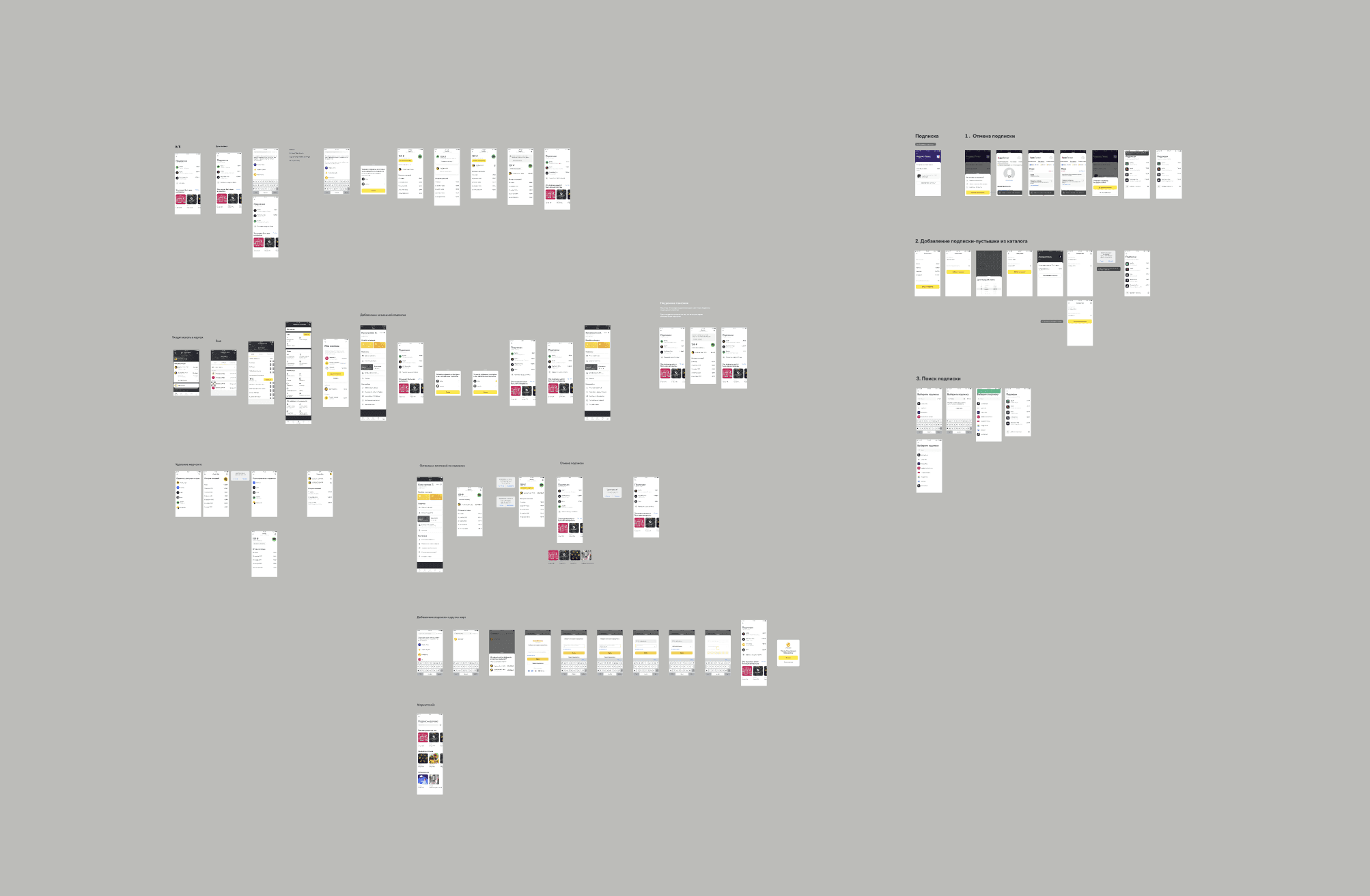
User flow
Scroll it →
Develop and launch
We didn’t include the option to change the payment card in the first release due to technical legacy issues on the backend, which could have significantly increased the development cost.
Simplified the functionality of corner cases for a quicker launch by providing text instructions in some cases on what happened and what can be done
What we’ve implemented
What problems we were solving and why
Our team's focus was on increasing user engagement and their loyalty.
The idea emerged to provide users with a feature that would help them control periodic payments from their cards by third-party services. There is a hypothesis that this feature may be in demand among customers and could increase their loyalty to the brand due to its usefulness and uniqueness in the local market, especially considering the growing trend when businesses offer subscription models. Thus, we could improve the NPS metric for the product.
People often pay for services they no longer use, forget to unsubscribe from a service, or don't find an easy and quick way to do so. They end up spending more money, knowing that there are cheaper alternatives, but they don't have the time or energy to compare and switch service providers. These conclusions were drawn from insider reports and research from third-party companies in the European fintech industry.
Contribution
I collaborated with other product teams and an agency that provided content for the feature. Participated in the formation of hypotheses and preparation for the research, created the prototype, UX/UI and controlled the quality of implementation into production.
Touchpoint
We researched where users would expect this feature within the current app architecture: the payments section in the «Transfers» tab (based on the idea that the users might expect subscriptions to be shown as scheduled payments) vs. the «More» tab, where non-core services of the banking app are located.
In the end, all respondents went to the «More» tab to find their subscriptions. However, the initial icon was not associated with such a service. We conducted a side-by-side test of pictograms, and the version chosen by users was added to the final design.
List of services
Under the title, we display the amount that the user pays monthly. As the vast majority of payments are monthly this format was convenient for showing the total amount.
For each subscription, we display the merchant's name, the payment date, the amount to be debited on that date, and additional information if there are any payment issues.
Subscription
On the subscription screen, in addition to the basic information from the previous screen, we show additional details: category, rate, the card linked in the service, and the balance on the card.
Logos didn't come with subscription information, and an external agency helped us with this.
I created a guide for them to prepare logos and backgrounds to make subscriptions easier to identify.
Subscription
states
A day before the payment when there is not enough money on the card.
Payment day and after (waiting for the deduction from the service).
The service requested payment, but there is no money on the card.
The card is blocked.
Card is closed.
Value for users and business
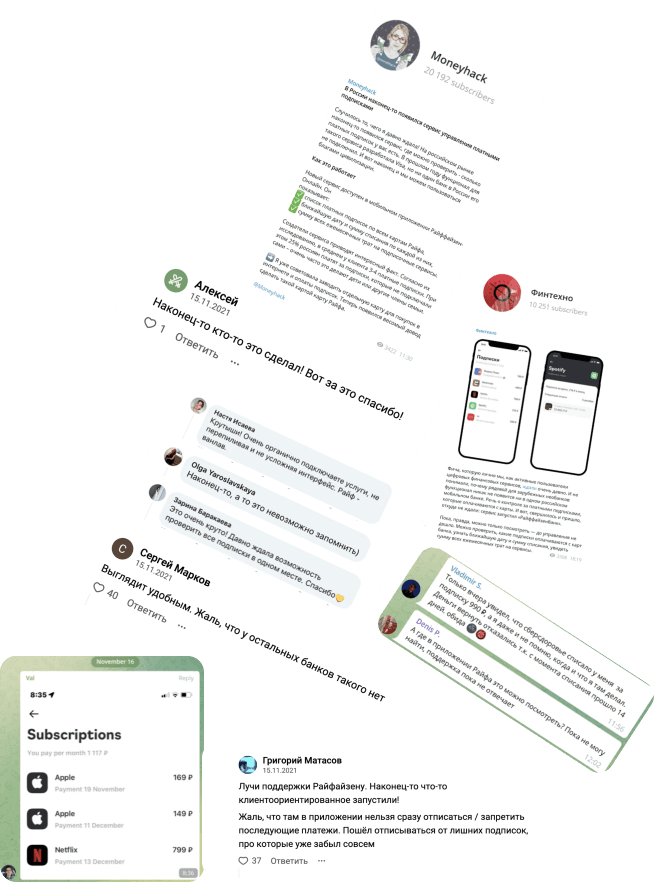
We received a lot of positive feedback from users across various channels, and we saw that 13% of people who had subscriptions showed activity in the section.
Overview
Raiffeisen Online is a mobile application for individuals of one of the systemically important banks in Russia.
Raiffeisen Online
Subscriptions
The feature that helps people control periodic charges from their cards by third-party services.